How this guide was prepared
SERVICEDIRECTORY reviewed the provider's published AOI explanation and organised the guidance around inspection objectives, defect size, sample coverage, optics and lighting, cycle time, false-reject control, programming, validation, and production integration.
Evidence boundary: SERVICEDIRECTORY did not independently validate a machine or production line. Detection capability, speed, repeatability, integration, and acceptance criteria should be demonstrated with representative samples and agreed test results. Read our editorial policy.
How an automated optical inspection machine works
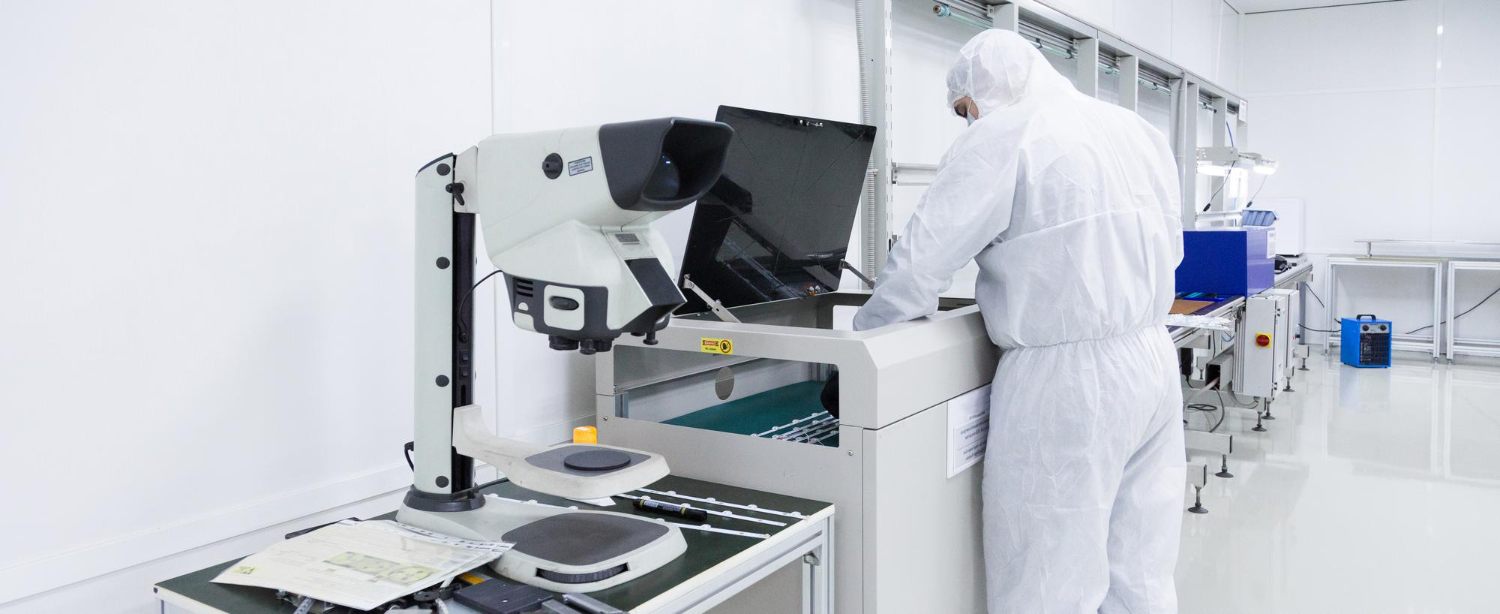
An automated optical inspection machine captures controlled images of a product and evaluates visible features against programmed requirements. The machine may inspect stationary parts, items travelling on a conveyor, panels, reels, wafers, assemblies, or products held in a fixture. A trigger tells the system when to capture an image, software processes the result, and an output sends the pass-fail decision to an operator, reject station, or production controller.
Image quality is the foundation of the inspection. Resolution alone is not enough. Lens selection, field of view, working distance, depth of field, exposure, lighting angle, product movement, and surface reflection all influence whether a defect can be seen consistently. A camera that produces an attractive image may still be unsuitable if it cannot separate acceptable variation from the specified defect.
Main machine components
- One or more industrial cameras, lenses, filters, and protected enclosures.
- Diffuse, directional, backlight, coaxial, ultraviolet, infrared, or other application-specific lighting.
- A computer or embedded controller running inspection tools and product recipes.
- Fixtures, stages, conveyors, motors, encoders, sensors, and safety components.
- An operator interface for recipe selection, alarms, images, trends, and result review.
- Communication with PLCs, robots, manufacturing systems, or reject mechanisms.
Inline and offline configurations
An inline machine is connected directly to production and must meet the line cycle time. It may inspect every item and automatically remove failed products. An offline or standalone station is separated from the main line and may be suitable for sampling, engineering analysis, incoming checks, or processes where products are loaded manually. The better option depends on inspection volume, handling, available space, traceability, labour, and the consequence of a delayed decision.
Manufacturers should also clarify whether the application needs 2D surface information, 3D height or shape data, line-scan imaging for continuous materials, or multiple views around a component. More cameras or advanced sensors do not automatically create a better system. The design should match the defect and production requirement.
What to evaluate before purchase
Prepare representative samples, including known defects near the acceptance limit. Record product sizes, variants, speed, orientation, surface finish, colour changes, and environmental conditions. During a sample evaluation, review detection results as well as false rejects. Ask how recipes will be created, protected, changed, backed up, and validated.
Support planning is equally important. Operators need clear instructions for normal use and result review, while engineering teams need a process for calibration, preventive maintenance, lighting replacement, software backups, and new product introduction. For a broader planning framework, continue to the AOI solution Malaysia guide.
Related AOI guides
AOI Solution Malaysia
Continue to this related automated optical inspection topic.
PCB AOI Inspection
Continue to this related automated optical inspection topic.
AOI vs Manual Inspection
Continue to this related automated optical inspection topic.
AOI Camera & Lighting
Continue to this related automated optical inspection topic.
AOI Programming & Validation
Continue to this related automated optical inspection topic.
Frequently asked questions
What is the difference between an AOI system and an AOI machine?
The system refers to the complete inspection method, while the machine usually describes the physical equipment that carries, images, evaluates, and sorts the product.
Can one AOI machine inspect multiple products?
Often yes, provided the optics, handling, field of view, and software support the variants. Each product normally requires a validated recipe.
Should an AOI machine be installed inline?
Inline installation suits high-volume automatic inspection, while offline equipment may be better for sampling, engineering checks, or manually loaded products.