How this guide was prepared
SERVICEDIRECTORY reviewed the provider's published AOI explanation and organised the guidance around inspection objectives, defect size, sample coverage, optics and lighting, cycle time, false-reject control, programming, validation, and production integration.
Evidence boundary: SERVICEDIRECTORY did not independently validate a machine or production line. Detection capability, speed, repeatability, integration, and acceptance criteria should be demonstrated with representative samples and agreed test results. Read our editorial policy.
What PCB AOI inspection checks
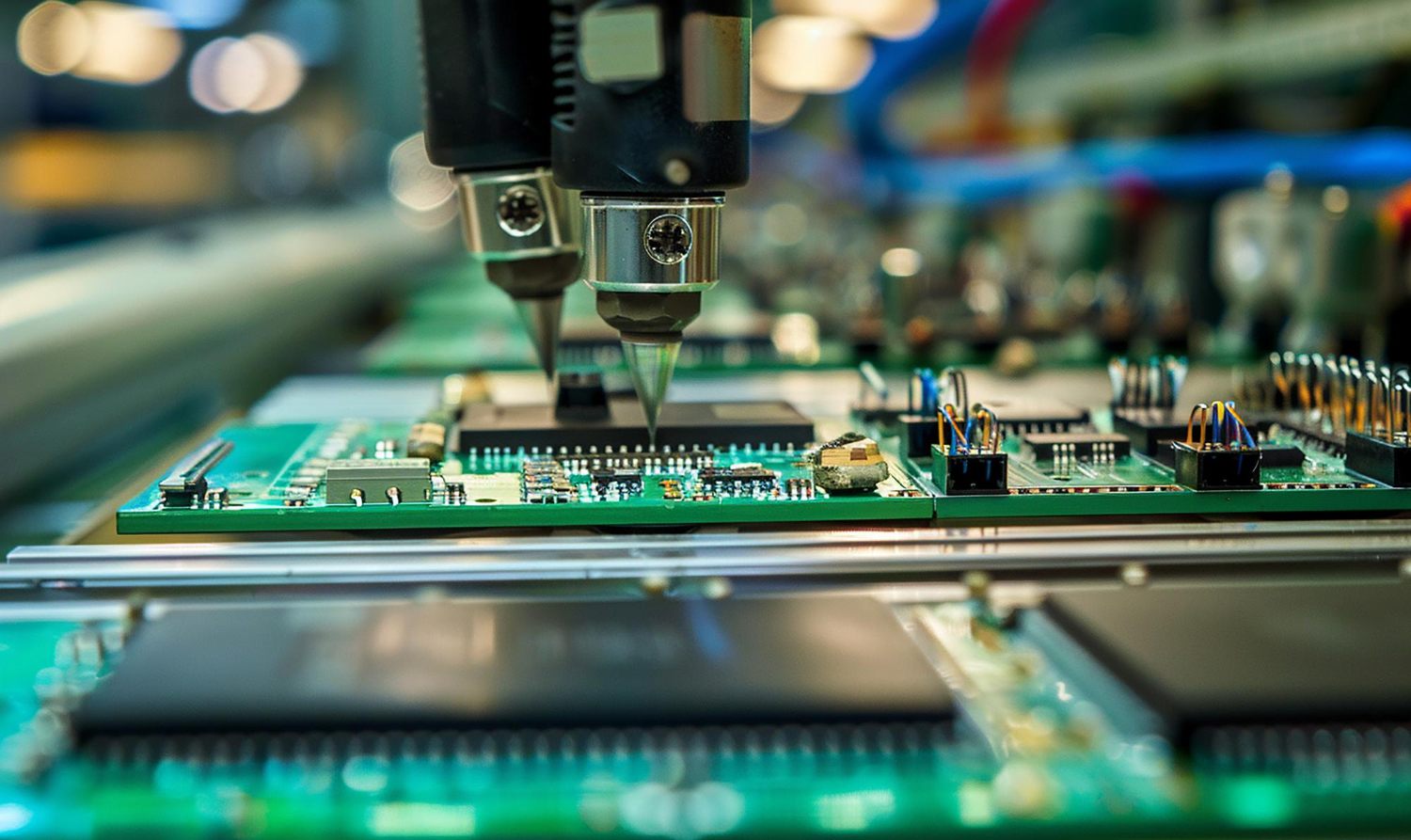
PCB AOI inspection uses cameras and controlled illumination to evaluate visible features on printed circuit boards or assembled circuit boards. It is commonly positioned within surface-mount technology production where repeated component checks must be completed quickly. Depending on the system and recipe, inspection targets may include component presence, position, orientation, polarity, markings, lifted or misaligned parts, contamination, scratches, and visible solder-related conditions.
AOI can examine many locations consistently, but it does not see every possible electrical or hidden defect. Joints concealed beneath components, internal board conditions, and electrical performance may require other methods such as electrical testing, X-ray inspection, functional testing, or process monitoring. A robust quality plan uses AOI where optical information is useful and combines it with complementary checks when needed.
Where AOI fits in PCB production
Pre-reflow AOI can identify placement problems before soldering, potentially allowing correction earlier in the process. Post-reflow AOI checks the assembled board after soldering and can help identify visible component or joint conditions. Some lines use one position, while others use both depending on risk, throughput, board complexity, and existing test coverage.
- Confirm the presence and approximate position of components.
- Check orientation, polarity, markings, or part type where visually distinguishable.
- Evaluate visible solder features according to the system capability.
- Record defect images and results for review or traceability.
- Provide production feedback when recurring errors indicate a process issue.
Programming and false-reject control
A PCB recipe must account for board tolerances, component appearance, silkscreen variation, solder reflections, colour, height, and normal placement variation. Limits that are too wide may miss relevant defects; limits that are too narrow may stop production with unnecessary false calls. Good programming therefore includes representative boards, known defects, review by process and quality personnel, and controlled approval before production use.
False rejects should not be treated only as an operator inconvenience. Frequent nuisance calls can slow the line and encourage rushed review. Teams should analyse recurring false calls, improve lighting or thresholds where appropriate, and document accepted recipe changes. Defect libraries and review stations can help operators make consistent decisions.
Who needs PCB AOI?
PCB assemblers may consider AOI when boards contain many inspection points, production volume is increasing, component sizes are small, manual checking is inconsistent, or traceability is required. It is also useful when early feedback can help the printing, placement, or reflow process. Before selecting equipment, compare board size, component range, line speed, inspection coverage, handling standards, programming resources, and after-sales support.
For a wider comparison of cameras, lighting, software, integration, and implementation planning, read the AOI solution Malaysia guide.
Related AOI guides
AOI Solution Malaysia
Continue to this related automated optical inspection topic.
Automated Optical Inspection Machine
Continue to this related automated optical inspection topic.
AOI vs Manual Inspection
Continue to this related automated optical inspection topic.
AOI Camera & Lighting
Continue to this related automated optical inspection topic.
AOI Programming & Validation
Continue to this related automated optical inspection topic.
Frequently asked questions
Can PCB AOI detect every solder defect?
No. AOI evaluates visible features. Hidden joints, internal conditions, and electrical performance may need X-ray, electrical, functional, or other testing.
Is AOI used before or after reflow?
It can be used at either stage. The position depends on the defects being controlled, production risk, inspection coverage, and line design.
Why does a PCB AOI machine produce false rejects?
Common causes include reflections, normal component variation, board movement, narrow tolerances, unstable lighting, or recipes that need further validation.